
The garage is one of the most useful spaces in a home. It often serves as a parking area, workshop, storage room, and project center. However, it can also become one of the most overlooked areas when it comes to safety. Between tools, chemicals, power equipment, vehicles, and storage boxes, garages can contain several potential hazards.
Creating a safer garage does not require a major renovation. Small improvements and good habits can reduce risks and make the space more comfortable for everyone in the household. Whether you use your garage for DIY projects, vehicle maintenance, storage, or family activities, focusing on safety can help prevent accidents and protect your property.
If you regularly work on vehicles, visit our Car Tips section for additional maintenance and garage organization ideas.
Why Garage Safety Matters
Many homeowners spend significant time improving kitchens, living rooms, and outdoor spaces but often overlook the garage. Yet garages contain many items that require careful handling. Sharp tools, flammable liquids, heavy equipment, and electrical devices can create hazards if not stored properly.
A safe garage supports productivity while helping protect family members, visitors, and pets. It also reduces damage to tools, equipment, and vehicles.
According to the U.S. Consumer Product Safety Commission, many household injuries occur because of preventable hazards involving tools, storage practices, and home equipment.
Store Hazardous Materials Safely
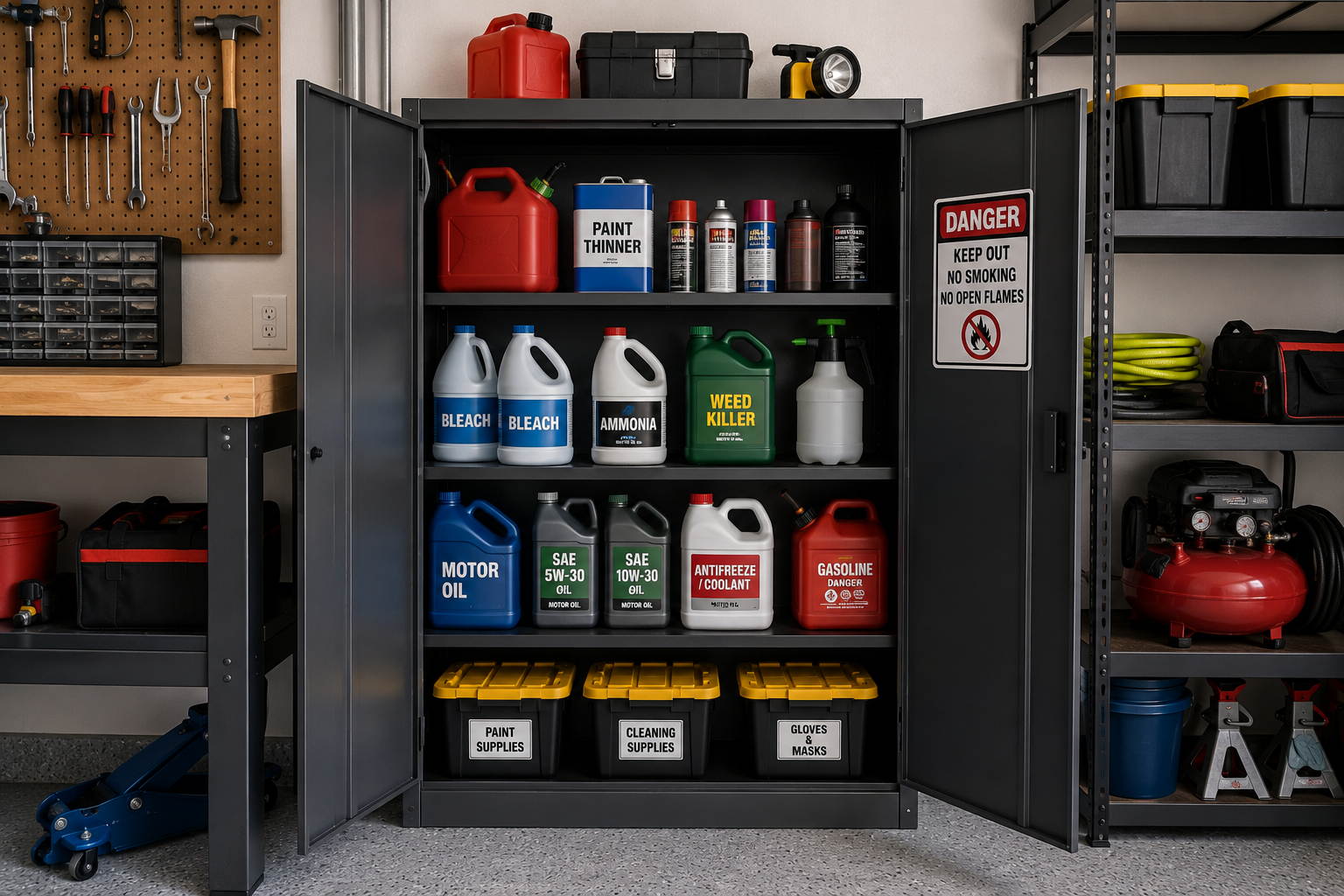
Many garages contain products such as gasoline, motor oil, paint, fertilizers, pesticides, and cleaning chemicals. These products require proper storage to reduce risks.
Store hazardous materials in their original containers whenever possible. Keep labels visible and avoid transferring chemicals into unmarked containers. Make sure storage areas remain dry, cool, and away from direct sunlight.
Use lockable cabinets when children frequently access the garage. Secure storage reduces the chance of accidental exposure.
Common Hazardous Materials Found in Garages
- Motor oil and automotive fluids
- Gasoline containers
- Paint and paint thinners
- Cleaning chemicals
- Pesticides and fertilizers
- Propane cylinders
The Environmental Protection Agency offers guidance on safe chemical storage through resources available at EPA.gov.
Keep Tools Organized and Secure
Tools are among the most frequently used garage items, but they can also create risks when left unsecured. Organizing tools properly helps reduce accidents while making projects easier to complete.
Store hand tools on pegboards, magnetic strips, or designated shelves. Keep power tools unplugged when not in use. Place sharp tools in drawers, cabinets, or protective covers.
Clearly organizing tools also saves time because you can quickly find what you need without digging through clutter.
For additional workshop organization ideas, Family Handyman provides useful examples at FamilyHandyman.com.
Prevent Slips, Trips, and Falls
Slips and falls are among the most common causes of household injuries. Garage floors can become slippery due to water, oil, grease, or clutter.
Inspect the floor regularly for spills and clean them immediately. Avoid leaving extension cords, hoses, tools, or storage boxes in walking paths.
Maintaining clear walkways improves safety while making it easier to move equipment around the garage.
Ways to Reduce Fall Hazards
- Clean spills immediately
- Use non-slip floor mats
- Store items off the floor when possible
- Keep walkways clear
- Repair damaged flooring
The National Safety Council offers additional home safety resources at NSC.org.
Improve Garage Lighting
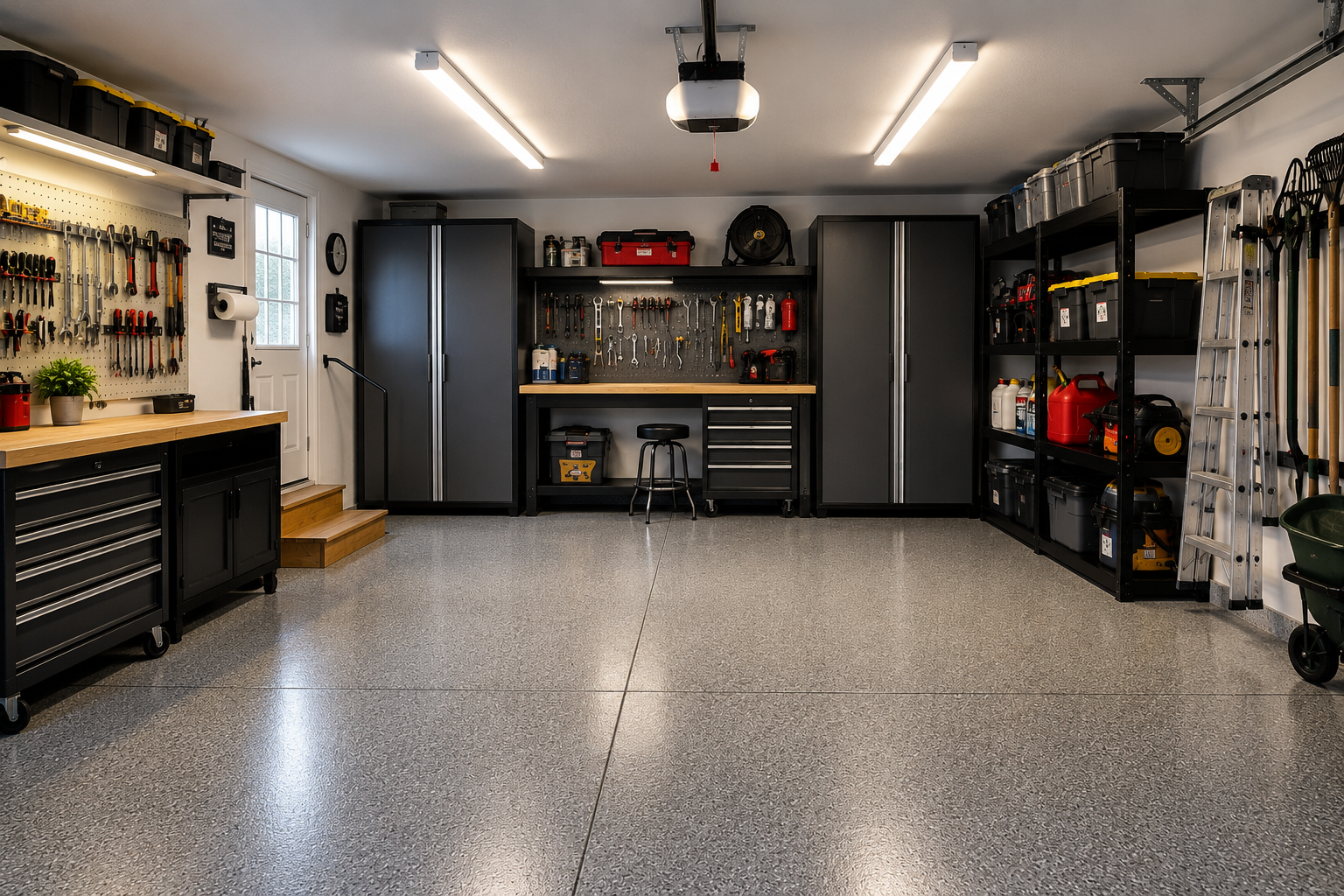
Good lighting improves both safety and productivity. Dark corners make it harder to identify hazards and complete projects accurately.
Consider upgrading to LED lighting throughout the garage. LED fixtures provide bright illumination while using less energy than many traditional lighting options.
Add focused lighting above workbenches, storage shelves, and vehicle maintenance areas.
You can learn more about efficient lighting choices from Energy.gov.
Practice Electrical Safety
Garages often contain power tools, battery chargers, lighting systems, and extension cords. Improper electrical practices can create fire and shock risks.
Inspect cords regularly for signs of wear or damage. Replace damaged cords immediately and avoid overloading outlets.
If your garage experiences moisture exposure, consider consulting a qualified electrician about GFCI-protected outlets.
Electrical Safety Checklist
- Inspect cords regularly
- Avoid overloaded outlets
- Use proper extension cords
- Unplug unused tools
- Replace damaged equipment promptly
Secure Heavy Storage Items
Heavy storage items can create hazards if shelves become overloaded or unstable. Secure shelving units to walls whenever possible.
Place heavier items on lower shelves and lighter items higher up. This reduces the chance of items falling and improves stability.
Overhead storage systems can be useful for seasonal items but should always follow manufacturer weight recommendations.
Maintain Fire Safety Equipment
Every garage should contain basic fire safety equipment. Because garages often store flammable materials, being prepared can help limit damage during emergencies.
Keep a properly rated fire extinguisher in an accessible location. Review its instructions and inspect it periodically.
Check smoke detectors and carbon monoxide detectors regularly if they are installed near the garage.
The National Fire Protection Association offers additional guidance at NFPA.org.
Create Safe Habits for Children
Children are naturally curious and may be drawn to tools, vehicles, and equipment. Establish clear safety rules regarding garage access.
Store dangerous items out of reach and supervise children when they are in the garage. Teaching basic safety habits early may help children understand potential risks.
Consider using locks, childproof cabinets, and designated storage zones to reduce access to hazardous items.
Perform Regular Safety Inspections
Garage safety is not a one-time task. Regular inspections help identify problems before they become larger concerns.
Walk through the garage every few months and look for potential hazards. Check shelves, lighting, electrical equipment, storage systems, and safety devices.
Small corrections made early can prevent future accidents and help maintain an organized space.
Conclusion
A safe garage benefits the entire household. By organizing tools, storing chemicals properly, improving lighting, maintaining fire safety equipment, and reducing trip hazards, you can create a safer and more functional space.
Many garage safety improvements require only a small investment of time but can provide long-term benefits. Regular maintenance and good habits help keep your garage organized while reducing common household risks.
For additional garage and vehicle-related advice, visit our Car Tips section for more practical ideas and resources.