
Electric vehicles are changing the way many homeowners think about their garages. Instead of simply providing a place to park, a modern garage can also become the primary charging location for an electric vehicle. With the right setup, homeowners can create a convenient space for charging, storing equipment, and keeping the vehicle ready for everyday driving.
Preparing a garage for an electric vehicle does not necessarily mean installing a complicated system. The right setup depends on the vehicle, driving habits, available electrical service, parking arrangement, and the type of charging equipment selected. The U.S. Department of Energy explains that most EV drivers charge at home using either Level 1 or Level 2 equipment. Learn more about home EV charging from the U.S. Department of Energy.
For Garage Dad readers who already use their garage for vehicle maintenance and organization, an EV setup can be another practical improvement. You can also explore our Car Tips page for additional vehicle-related advice.
Why Prepare Your Garage for an Electric Vehicle?
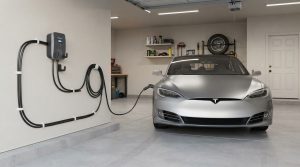 Home charging can make EV ownership more convenient because the vehicle can charge while it is parked. For many homeowners, overnight charging can fit naturally into an everyday routine without requiring a separate trip to a public charging station.
The U.S. Department of Energy notes that Level 1 charging can work for some drivers using a standard household outlet, while Level 2 equipment can provide faster charging for drivers who need more energy during the time the vehicle is parked. The appropriate option depends on the vehicle and the homeowner’s driving and charging needs. See the DOE consumer information on EV charging.
Preparing the garage also creates an opportunity to organize the charging cable, protect equipment from unnecessary damage, and make sure the area remains easy to walk through.
Benefits of a Well-Planned EV Garage
- Convenient overnight charging
- Better cable organization
- A dedicated parking and charging area
- Less clutter around the vehicle
- Easier integration with existing garage storage
Choose the Right Home Charging Setup
The first step is determining which type of charging equipment makes sense for your vehicle and routine. Level 1 charging generally uses a standard 120-volt household outlet. Level 2 charging uses higher-voltage residential electrical service and can provide faster charging.
Not every homeowner needs Level 2 equipment. If the vehicle is driven relatively short distances and remains parked for many hours overnight, Level 1 charging may provide enough energy for everyday use. Drivers with longer commutes or larger charging needs may prefer Level 2 equipment.
The DOE’s Alternative Fuels Data Center explains that Level 1 charging can provide approximately five miles of range per hour under its stated assumptions, while Level 2 can provide approximately 25 miles of range per hour. Actual charging performance varies according to the vehicle, battery, charger, and electrical system. Review current EV charging information from the Alternative Fuels Data Center.
Plan Your Garage Electrical Setup
Before installing new charging equipment, evaluate the electrical capacity available in your home. A Level 2 charger may require a dedicated circuit, and the existing electrical service may not always have sufficient capacity for the planned installation.
This is an area where professional advice matters. The U.S. Department of Energy recommends working with a qualified electrical contractor who can determine whether the home’s electrical system can support the charging equipment. Local permits and electrical requirements may also apply.
Do not attempt to install a new high-voltage charging circuit as a casual DIY project. A qualified electrician can evaluate the panel, wiring, circuit requirements, equipment location, and applicable electrical codes.
Questions to Discuss With an Electrician
- Does the electrical panel have adequate capacity?
- Is a dedicated circuit required?
- Where should the charging equipment be installed?
- Are permits required in the local area?
- How should the charging cable be routed?
The DOE’s home charging guidance explains that local and state codes may apply and that permits may be required depending on the location and installation. Review DOE guidance for installing charging equipment at home.
Choose a Good Location for the Charger
Charger placement can make a significant difference in how practical your garage feels. Ideally, the charging equipment should be positioned where the vehicle can reach it without creating unnecessary cable loops across walkways.
Consider where the vehicle’s charging port is located. Different EVs have different charging-port positions, so the best wall location for one vehicle may not be ideal for another.
Think about how you normally park. The charger should be easy to reach while leaving enough room to open vehicle doors and move safely around the garage.
Good Charger Placement Should Provide
- Easy access from the vehicle’s charging port
- Minimal cable crossing through walking areas
- Protection from accidental vehicle contact
- Convenient access to the electrical connection
- Enough clearance around the equipment
Manage the Charging Cable
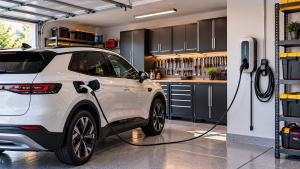 Charging cable management is one of the simplest improvements you can make to an EV garage. A cable left on the floor can become an unnecessary trip hazard and may also be exposed to vehicle tires, dirt, water, or other garage activity.
Use a manufacturer-approved or appropriately rated cable management solution to keep the cable organized. A wall hook, dedicated hanger, or charger-integrated cable holder can keep the equipment off the floor when it is not being used.
Avoid creating tight bends or placing unnecessary stress on the cable. Follow the charging equipment manufacturer’s instructions for storage and use.
Keep the Charging Area Clear
An EV charging station works best when the surrounding area remains organized. Avoid stacking boxes, tools, bicycles, or other equipment directly around the charger.
This is where the storage improvements covered in our article about garage organization and vehicle care can become useful. Keeping frequently used equipment in designated locations helps preserve clear access to the vehicle and charger.
A clear charging area also makes it easier to inspect the equipment periodically and notice problems such as damaged cables, loose components, or unusual wear.
Consider Smart Charging Features
Some modern EV charging equipment includes connected features that allow homeowners to monitor charging sessions, schedule charging, and review energy information. These features can be useful for homeowners who want more control over how and when their vehicle charges.
Smart charging may also fit naturally into a broader connected-home setup. However, features vary considerably between products, so compare equipment specifications before making a purchase.
Some utilities also offer time-of-use electricity rates. If such a rate is available in your area, charging during certain hours may affect your electricity costs. Check directly with your utility because rate structures and eligibility vary by location.
Keep Safety in Mind
EV charging should be treated as an electrical system rather than simply another household appliance. Use equipment that is appropriately certified and follow the vehicle and charger manufacturer’s instructions.
The DOE recommends safety-certified charging equipment and notes that nationally recognized testing laboratories can certify products. Equipment should also be installed and used according to applicable codes and manufacturer requirements.
Keep the charger and cable away from unnecessary physical damage. Do not modify charging equipment or use damaged cords. If you notice unusual heat, visible damage, repeated faults, or other problems, stop using the equipment and consult the appropriate manufacturer or qualified professional.
Simple EV Garage Safety Habits
- Inspect charging equipment regularly.
- Keep cables away from vehicle tires.
- Do not use visibly damaged charging equipment.
- Keep the charging area free from clutter.
- Follow the vehicle manufacturer’s charging instructions.
- Have electrical installation work performed by a qualified professional.
For additional vehicle safety information, visit the National Highway Traffic Safety Administration’s electric and hybrid vehicle resources.
Combine EV Charging With Garage Organization
An EV charger does not need to make your garage feel more cluttered. Instead, use the installation as an opportunity to improve the entire area. Keep vehicle cleaning supplies together, organize hand tools, and create a dedicated location for charging accessories.
Wall-mounted storage can help keep items off the floor. Cabinets can conceal smaller equipment, while labeled bins can hold seasonal supplies. The goal is to make the charger part of an organized garage rather than treating it as a separate addition.
If your garage already functions as a workshop, keep the charging area separate from active project areas whenever possible. This gives you room to work while reducing the chance of accidentally damaging charging equipment.
Think About Future Garage Needs
When planning an EV garage, think beyond the vehicle you currently own. Your future needs may be different. You might eventually have a second EV, add solar equipment, change vehicles, or use the garage for additional electrical equipment.
That does not mean you need to install everything today. Instead, discuss future possibilities with your electrician before completing the installation. Planning conduit routes, panel capacity, and equipment locations can sometimes make future changes easier.
At the same time, avoid spending money on upgrades you do not currently need. A practical garage setup should match your vehicle, home, budget, and everyday routine.
Build a Practical EV Garage Checklist
Before completing your setup, walk through the garage and review the entire charging area. Make sure the vehicle can park comfortably, the charger can reach the charging port, and the cable can be stored without obstructing walkways.
EV Garage Checklist
- Confirm the vehicle’s charging requirements.
- Choose Level 1 or Level 2 based on your needs.
- Have electrical capacity evaluated when necessary.
- Check local permit and code requirements.
- Choose a convenient charger location.
- Plan cable management before installation.
- Keep the charging area clean and accessible.
- Follow manufacturer safety instructions.
Conclusion
An electric vehicle can change the way you use your garage, but creating a practical charging area does not have to be complicated. Start by understanding your vehicle’s charging requirements, then consider your driving habits, available electrical service, parking arrangement, and preferred charger location.
For many homeowners, Level 1 charging may be sufficient for everyday needs, while others may benefit from the faster charging capabilities of Level 2 equipment. The right choice depends on how much energy your vehicle needs and how long it typically remains parked.
A successful electric vehicle garage setup should also include good cable management, clear walking areas, appropriate equipment, and professional electrical installation when required. By planning these details before installation, you can create a garage that is ready for everyday EV ownership while remaining useful for everything else your family does there.
For more practical vehicle and garage advice, visit the Garage Dad Car Tips page.