
Garage tools are built to handle demanding work, but even high-quality equipment can suffer when exposed to moisture. Rust can weaken metal, damage moving parts, dull cutting edges, and shorten the useful life of hand tools and power tools. Learning how to protect garage tools from rust is one of the simplest ways to preserve your investment and keep your workshop ready for the next project.
Moisture problems are especially common in garages because these spaces often experience temperature changes, limited ventilation, wet vehicles, and humid outdoor air. Water can enter through open doors, roof leaks, damp concrete, or condensation. Once moisture settles on exposed metal, corrosion can begin before the damage becomes noticeable.
The good news is that preventing rust does not require an expensive workshop renovation. Proper cleaning, organized storage, moisture control, and regular inspections can make a major difference. The following steps will help you create a drier environment and keep your tools in dependable condition throughout the year.
For more practical advice on maintaining your garage and vehicle equipment, visit the Garage Dad Car Tips page.
Why Rust Forms on Garage Tools
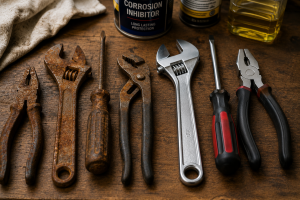 Rust develops when iron or steel reacts with oxygen and moisture. Tools do not need to be soaked in water for corrosion to begin. Humid air, condensation, fingerprints, wet rags, and small amounts of water can all leave enough moisture on metal surfaces to cause oxidation.
Garages are vulnerable because temperatures can change quickly. A cold metal tool may collect condensation when warmer, humid air enters the garage. This is similar to the moisture that forms on the outside of a cold drink. If the tool remains damp, rust may begin forming in small scratches, joints, or unprotected surfaces.
Road salt can also increase corrosion. During winter, vehicles may carry salty water into the garage. When that moisture evaporates, salt residue can remain on the floor, shelving, and nearby tools. Salt attracts moisture and speeds up the corrosion process.
Tools that are used outdoors may bring moisture, soil, fertilizers, or chemicals back into the garage. Garden tools, automotive tools, and equipment stored near garage doors are often exposed to the greatest amount of moisture.
Clean Tools Before Putting Them Away
One of the most effective ways to prevent rust is to clean tools before returning them to storage. Dirt, grease, sawdust, grass, and chemical residue can hold moisture against metal. A tool that looks dry may still have damp material trapped around hinges, teeth, handles, or adjustment mechanisms.
After completing a project, wipe tools with a clean, dry cloth. Remove sawdust from cutting tools and brush soil from garden equipment. Automotive tools should be cleaned of oil, coolant, road grime, and other residue before storage.
For tools exposed to water, dry them completely before placing them in a drawer or cabinet. Pay close attention to joints, sockets, ratchets, and moving parts where moisture can remain hidden.
Simple Tool-Cleaning Routine
- Remove loose dirt, dust, and debris.
- Wipe metal surfaces with a clean cloth.
- Dry joints, hinges, and moving parts thoroughly.
- Apply a light protective lubricant when appropriate.
- Return the tool to a dry storage location.
A regular cleaning routine also gives you an opportunity to spot cracks, worn handles, loose fasteners, and early rust. Addressing these small issues can help prevent more expensive damage later.
For general home workshop and tool-care ideas, review the practical project resources from This Old House.
Apply a Protective Coating to Metal Surfaces
Clean metal can still rust if it remains unprotected in a humid garage. A thin coating of oil, wax, or corrosion inhibitor creates a barrier that reduces direct contact between metal and moisture.
Hand tools such as wrenches, pliers, sockets, chisels, and garden shears may benefit from a light application of machine oil or another product recommended by the manufacturer. Use only a small amount and wipe away the excess so the tool does not become slippery or collect excessive dust.
For saw blades, cast-iron tables, and woodworking equipment, a dry protective coating or paste wax may be more suitable than wet oil. Always check the equipment instructions before applying any product, especially on powered machinery or tools with electrical components.
Areas That Commonly Need Protection
- Unpainted steel surfaces
- Tool joints and adjustment screws
- Socket interiors
- Cutting edges
- Cast-iron work surfaces
- Garden tool blades
Do not apply oil to tool grips, electrical contacts, braking surfaces, or areas where lubrication could create a safety problem. Follow the manufacturer’s maintenance recommendations whenever possible.
Control Moisture Inside Your Garage
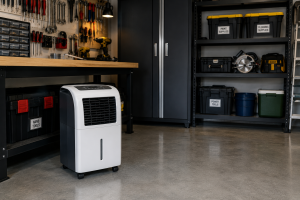 Protecting individual tools is important, but controlling moisture throughout the garage provides broader protection. Start by determining where the moisture comes from. Common sources include wet cars, roof leaks, plumbing leaks, damp concrete, poor drainage, and humid outdoor air.
If the garage regularly feels damp or smells musty, use a humidity monitor to track conditions. A small digital hygrometer can show whether humidity remains high during certain seasons or weather conditions.
A portable dehumidifier may help in enclosed garages where humidity remains excessive. Choose a unit appropriate for the room size and empty or drain it according to the manufacturer’s directions. Keep the unit away from sawdust, flammable vapors, and areas where it could be damaged.
Ventilation can also help, but it must be used carefully. Opening the garage door may reduce humidity on a dry day, while opening it during hot and humid weather can introduce more moisture. Use ventilation when outdoor conditions are favorable.
The U.S. Environmental Protection Agency provides useful information about moisture control and reducing conditions that encourage mold and dampness.
Ways to Reduce Garage Moisture
- Repair roof, wall, and plumbing leaks promptly.
- Use a floor squeegee after wet vehicles enter.
- Improve drainage around the garage exterior.
- Use a dehumidifier when appropriate.
- Avoid storing wet towels, cardboard, or clothing.
- Keep gutters and downspouts working properly.
Choose Tool Storage That Reduces Exposure
Tools left on open benches or near a garage door are more exposed to humid air, dust, splashes, and temperature changes. Enclosed storage provides an extra level of protection.
A tool chest with well-fitting drawers can reduce exposure while keeping equipment organized. Cabinets are helpful for larger power tools, specialty equipment, and supplies. Avoid placing tools directly on concrete floors because concrete can release moisture and create temperature differences that encourage condensation.
Use shelf liners or drawer liners that do not absorb water. Foam liners can reduce tool movement, but they should be inspected periodically because moisture can become trapped underneath them.
Small moisture-absorbing packets may be useful in enclosed toolboxes, but they are not a replacement for fixing a larger humidity problem. Replace or reactivate them according to the product instructions.
For additional storage ideas, explore tool and garage storage options from The Home Depot.
Keep Tools Away from Wet Vehicles and Garage Doors
The area near a parked vehicle can become one of the dampest parts of a garage. Rainwater, melting snow, road spray, and air-conditioning condensation may collect beneath or around the vehicle.
Whenever possible, position tool cabinets and workbenches away from the parking area. Leave enough space between the vehicle and storage cabinets to prevent water from splashing onto tools.
Tools stored near the garage door are also exposed to outside air and wind-driven rain. If your garage layout requires storage near the door, use enclosed cabinets and keep tools elevated above the floor.
After driving in wet conditions, remove standing water with a floor squeegee or absorbent material. Allow the space to dry before closing every ventilation opening.
Protect Power Tools and Batteries
Power tools require special care because moisture can damage motors, switches, electrical contacts, batteries, and internal components. Never store power tools while they are wet or covered in damp dust.
Wipe tools down after use and allow them to cool before placing them in enclosed cases. A hot tool sealed inside a case may create condensation as it cools.
Store batteries according to the manufacturer’s recommendations. Extreme heat, cold, and moisture can reduce battery life. Avoid leaving cordless tool batteries on damp floors, near leaking walls, or inside vehicles for extended periods.
Inspect power cords, chargers, and plugs regularly. If moisture has entered an electrical tool, do not use it until it has been inspected and confirmed safe.
Manufacturer maintenance instructions are available through tool companies such as DEWALT Support. Always use instructions that match your specific tool model.
Remove Early Rust Before It Spreads
Early rust is often easier to remove than advanced corrosion. Inspect metal tools every few months, especially during humid seasons. Look for orange discoloration, rough spots, staining, or stiffness in moving parts.
Light surface rust may be removable with a fine abrasive pad, wire brush, rust eraser, or approved rust-removal product. Clean the area carefully, dry it completely, and apply a protective coating afterward.
Do not aggressively grind precision tools, measuring equipment, cutting edges, or safety-critical components. Removing too much material may change the tool’s shape or strength. Severely corroded tools should be replaced when their condition affects safe operation.
Signs a Tool May Need Replacement
- Deep pitting in load-bearing areas
- Cracks or weakened metal
- Frozen or damaged adjustment mechanisms
- Severe corrosion near electrical components
- Cutting edges that cannot be restored safely
Avoid Common Storage Mistakes
Some storage habits unintentionally increase rust risk. Leaving tools inside wet bags, cardboard boxes, or damp fabric can trap moisture. Cardboard also absorbs humidity and may hold it close to metal surfaces.
Plastic containers can protect tools from splashes, but they may also trap condensation if tools are stored while damp. Make sure everything is completely dry before closing the container.
Do not place damp gloves or cleaning towels inside a toolbox. Store wet materials separately and allow them to dry fully.
Another common mistake is overcrowding drawers. Packed tools may rub against one another, damage protective coatings, and make inspections difficult. Organized storage makes it easier to notice corrosion before it becomes serious.
Create a Seasonal Tool Maintenance Schedule
A simple maintenance schedule helps prevent rust without adding much work. Inspect your tools at the beginning of each season or after extended periods of wet weather.
During the inspection, clean storage drawers, check for moisture, examine metal surfaces, lubricate moving parts, and replace damaged liners or moisture-control products.
Seasonal Maintenance Checklist
- Inspect tools for rust and damage.
- Clean drawers, cabinets, and work surfaces.
- Check the garage for leaks or damp areas.
- Test the humidity monitor or dehumidifier.
- Lubricate joints and moving parts.
- Remove wet cardboard and fabric.
- Review power-tool cords and batteries.
Adding this routine to your overall workshop maintenance plan can help your tools remain reliable. It also supports a cleaner and safer garage environment.
Conclusion
Rust prevention begins with controlling moisture and developing consistent tool-care habits. Cleaning tools after use, drying them thoroughly, applying suitable protective coatings, and choosing enclosed storage can reduce corrosion and extend equipment life.
It is equally important to address the garage environment. Repair leaks, remove standing water, monitor humidity, and keep tools away from wet vehicles and damp floors. These improvements protect more than your tools; they can also help preserve storage cabinets, workbenches, vehicle parts, and other garage equipment.
Start by inspecting the tools you use most often. Clean and protect them, then review the areas where they are stored. A few small improvements today can help prevent damaged tools, frustrating repairs, and unnecessary replacement costs later.
For more garage and vehicle maintenance guidance, explore the Garage Dad Car Tips section.